This year’s Medieval Music in the Dales explores repertoires from the medieval Margins - geographically, culturally and socially.
The word Christendom originally had a more strictly religious connotation of Christianity, but by the 14th century it had acquired a geographical focus, fundamentally denoting the European land mass that was dominated by the Christian faith. Most of the European music that survives comes from this Christendom; indeed the bulk of what survives is explicitly Christian music. Christianity has always played a crucial role in the formation of European identity.
But the Europe of the middle ages was not mono-religious, nor mono-cultural. Jewish and Muslim communities existed in different areas at different times, and both religions moreover had a role in shaping the development of medieval music. There’s a problem in that little survives in written form - the writing of music in the European middle ages is very much Christian-dominated - but these communities had their musics and Margins will explore these musical worlds.
It’s also worth considering what is or was Europe/Christendom? Dig a little and it’s clear some regions counted more than others. Christian conversion came later to some areas towards the north and north-east. And in the Balkans and eastern Mediterranean, Christian authority was contested - did Christendom extend to include Orthodoxy? Or were these heretics, not entirely ‘one of us’? Margins will visit Cyprus and Greece, where eastern and western Christianity existed side by side.
Finally, let’s not pretend that medieval Europe wasn’t both patriarchal and hetero-normative. For all that, the human experience is inevitably wider and more diverse than what any society imposes as norms, and Margins will explore medieval diversity in many forms. Read on for more about our programme of concerts, workshops and talks this year at Medieval Music in the Dales. And check out details of the Study Day on September 10th here.
Going to the Medieval Margins?
Concerts in St Oswald’s
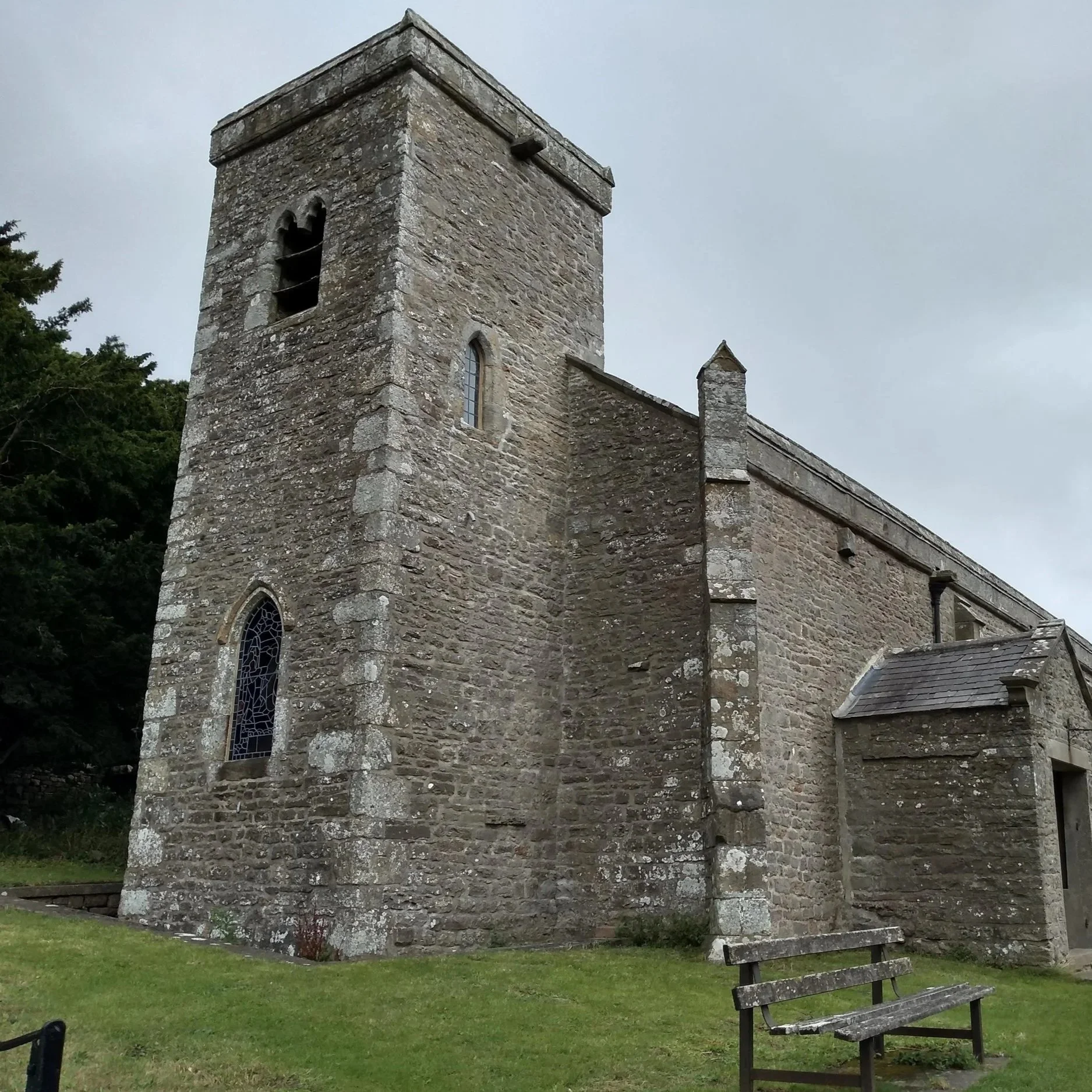
Daytime concerts in fourteenth-century St Oswald’s Church, adjacent to Bolton Castle. All these concerts are included in the Festival Pass and can’t be booked individually - you must have a Festival Pass for at least that day.
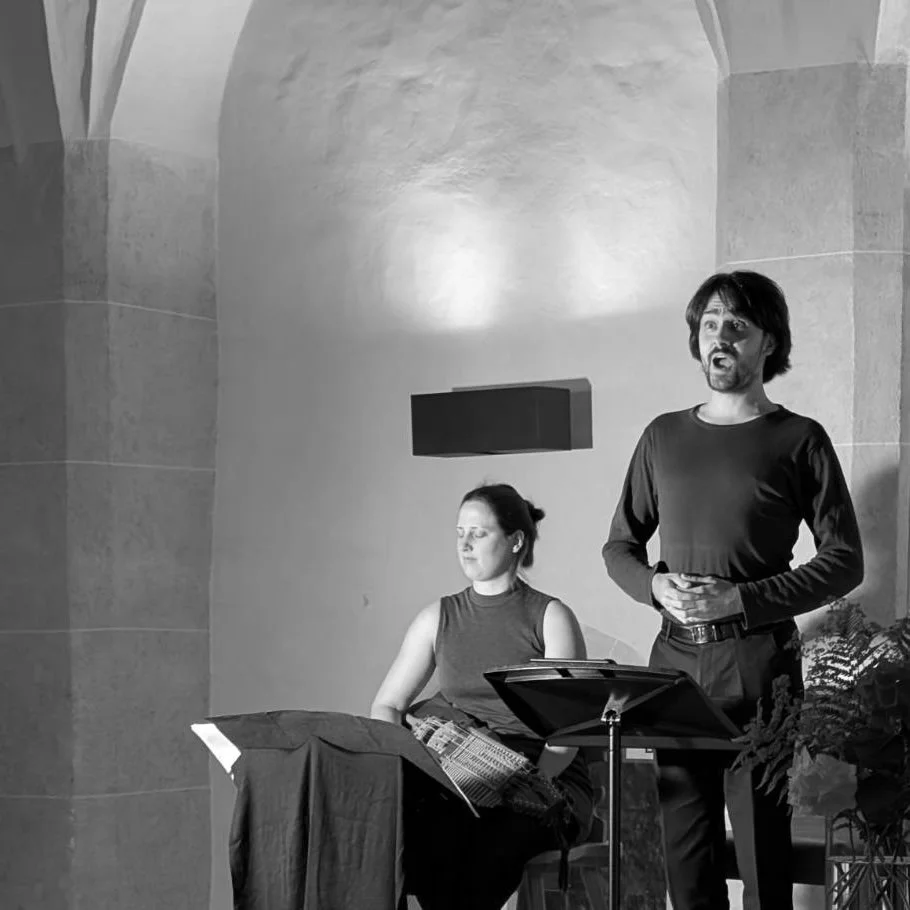
Fresh from triumphs at last year’s MMitD, Peppe Frana (lute, oud, gittern) returns to Medieval Music in the Dales together with Syrian singer Mirna Kassis. Their programme aims to bring the styles of the middle east to the festival. Expect to hear muwashahat - medieval Arabic poetry set to music in more modern times and informed by medieval Arabic musical theory - and the Cantigas de Santa Maria in a performance style inspired by Persian and central Asian storytelling/sung poetry traditions.
Andalusiat
Sibil•la Ensemble revives and performs medieval and traditional music from Cyprus. Situated between the Eastern Mediterranean and the Western world, Cyprus has been shaped over centuries by diverse musical and cultural influences, converging ancient rituals, with Byzantine and medieval traditions. These elements coexist as traces within the island’s soundscape, forming a continuum in which older practices are preserved, transformed, and recontextualized across time. Anabiosis (“revival” in Cypriot Greek) reflects this enduring continuity and highlights the island’s rich and beautiful musical heritage.
Ensemble Sibil.la: Anabiosis
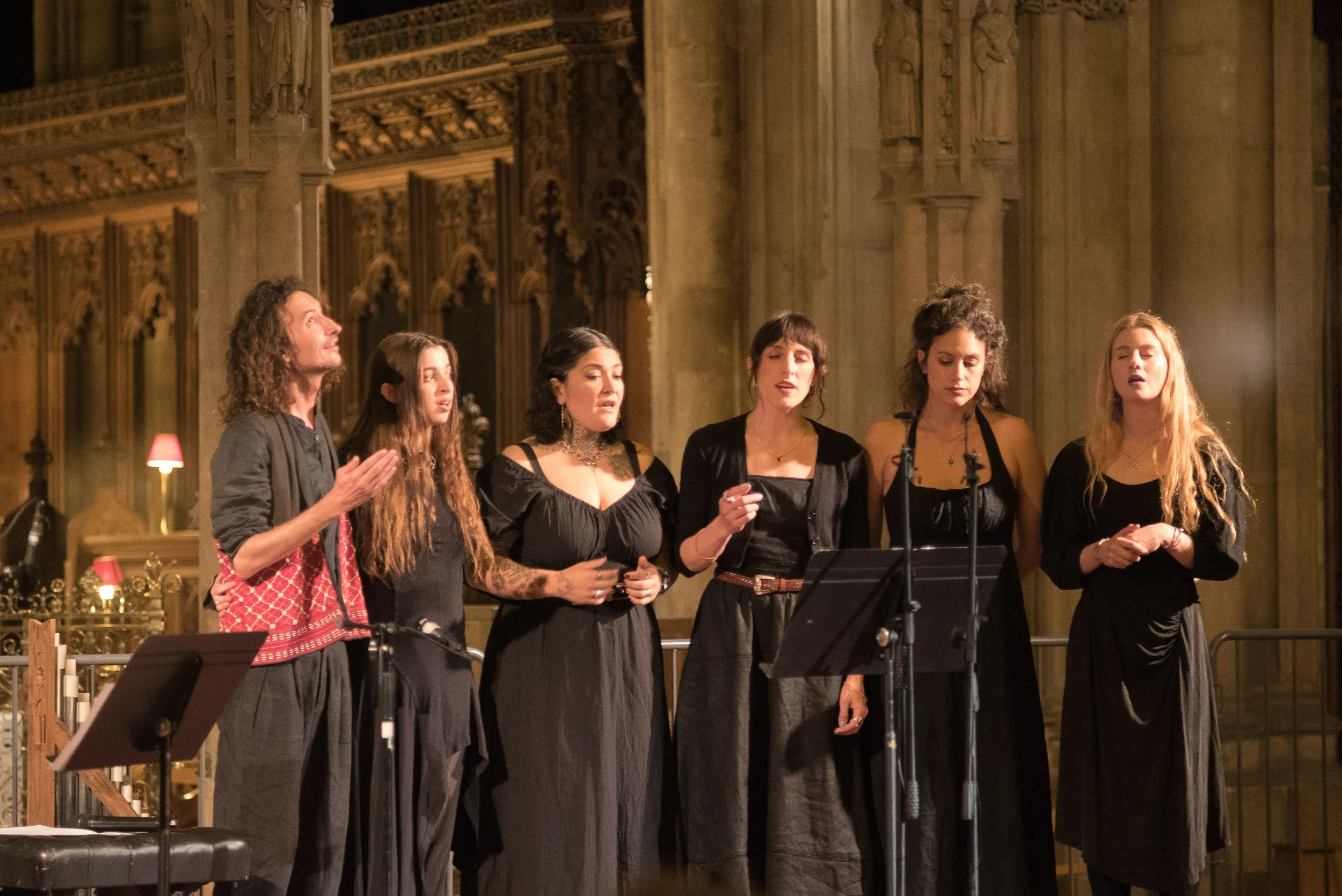
Idrîsî Ensemble: Singer & Scribe
Acclaimed Idrîsî Ensemble brings a programme that places medieval repertoire in direct dialogue with living traditions, asking what each can illuminate in the other. Known for a research-led approach that reconsiders inherited practices and boundaries within early music, the ensemble explores medieval sound worlds alongside oral traditions that preserve, transform, and extend them.
In 1290, Edward I issued the Edict of Expulsion, banishing all Jews from England. Up until this time, Jews played an important role in building English society and, during their stay there, built up a unique cultural “mishmash” that included Norman, Jewish and English influences. Numerous poems written by Jewish authors living in England or that talk about the situation in the British Isles have come down to us, in forms that we know were (and often still are) performed vocally. With painstaking research, using historical and traditional musical sources, Lucidarium tries to bring this important narrative back to life and show what living as a Jew in medieval England might have been like.
Lucidarium: Before the Fall
Poul Høxbro and Ian Harrison: Wayfaring Pipers
Only the tip of the medieval musical iceberg is available in surviving manuscripts and there is no doubt that "under the surface" there was a burning desire to create, as witnessed by the countless medieval depictions of musicians "in action". It is this universe of pulsating everyday music that Ian Harrison and Poul Høxbro explore in their "Wayfaring Pipers" programme, combining their deep knowledge of medieval sources with their insight into the folk music in many parts of the world. Their MMitD programme will have a special focus on Scandinavia.
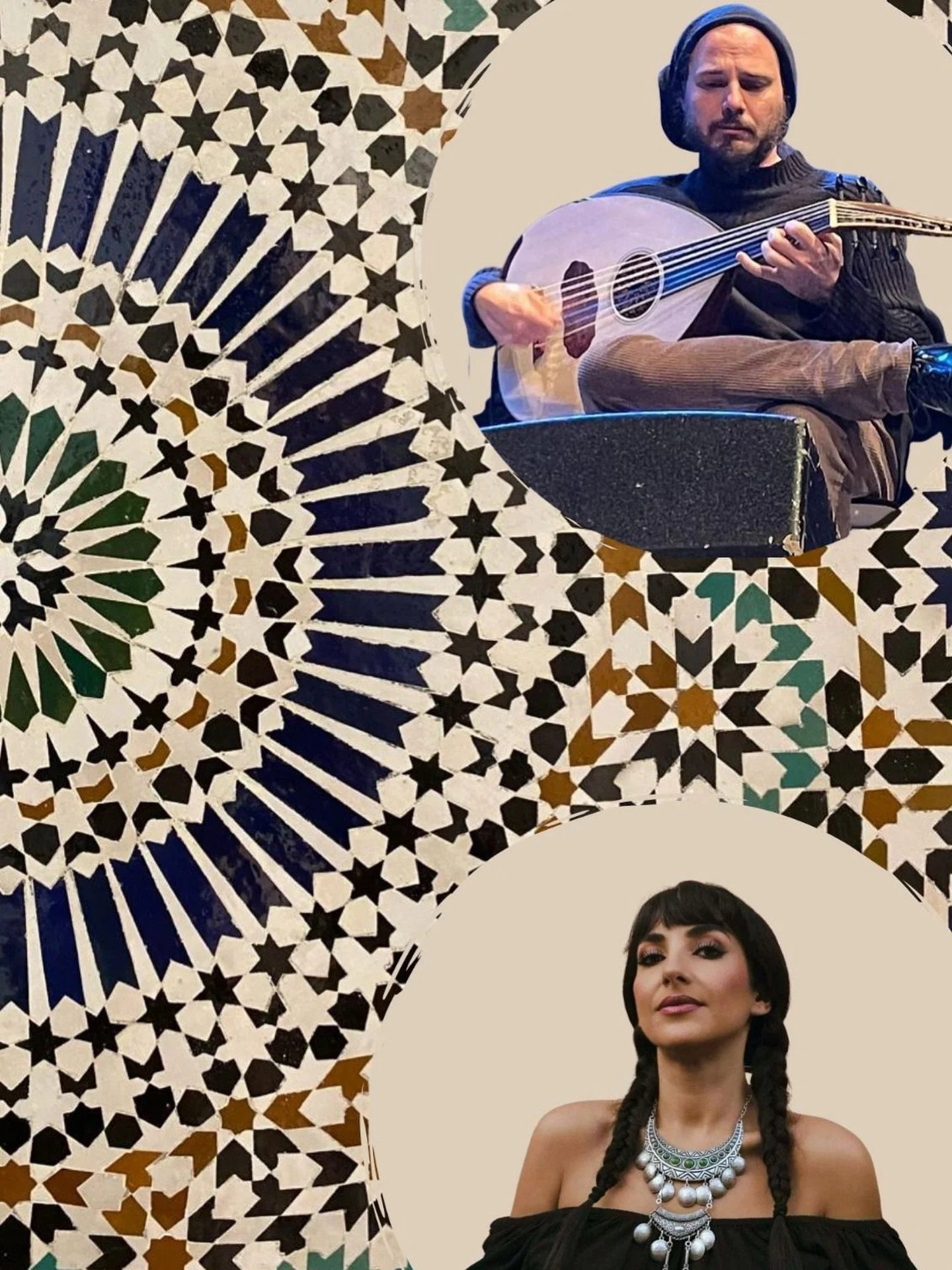
Duo Andalusiat
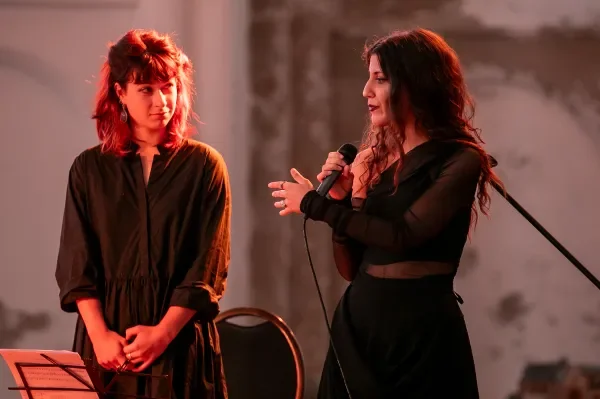
Ensemble Sibil.la
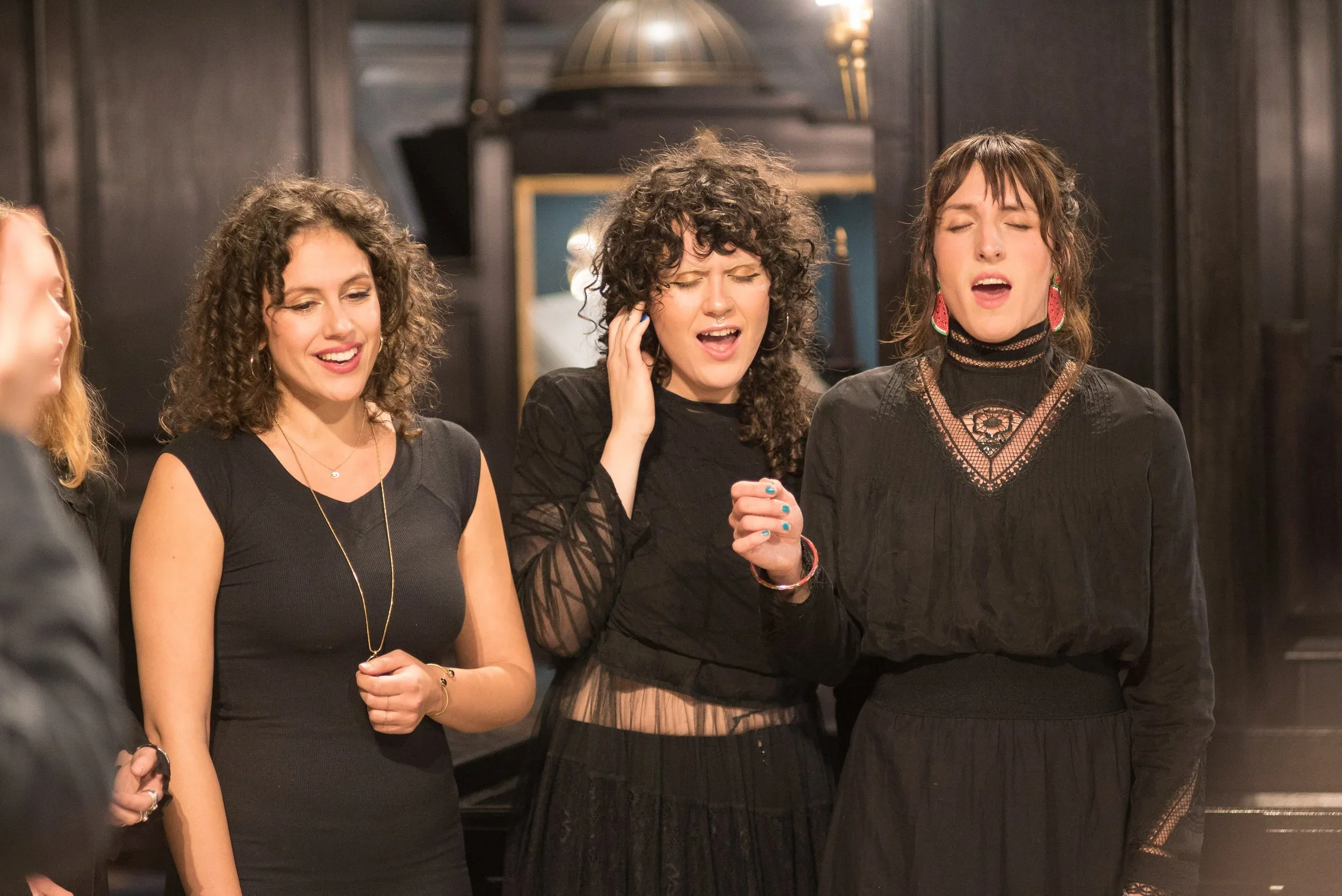
Idrîsî Ensemble
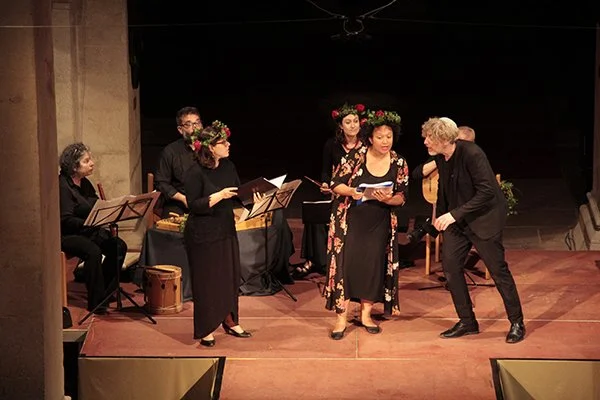
Lucidarium
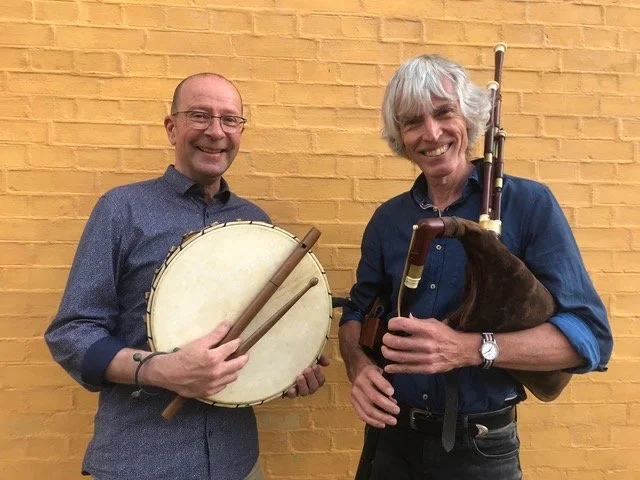
Ian Harrison and Poul Høxbro
Chamber Concerts In Queen Mary’s Chamber
Early evening concerts in Queen Mary’s Chamber in Bolton Castle. Cosy and informal in character, each chamber concert contains a short set by two different performers, lasting for about an hour in total. These concerts are included in the Festival Pass and can’t be booked individually - you must have a Festival Pass for at least that day.
David Yardley: The Rainbow Margin
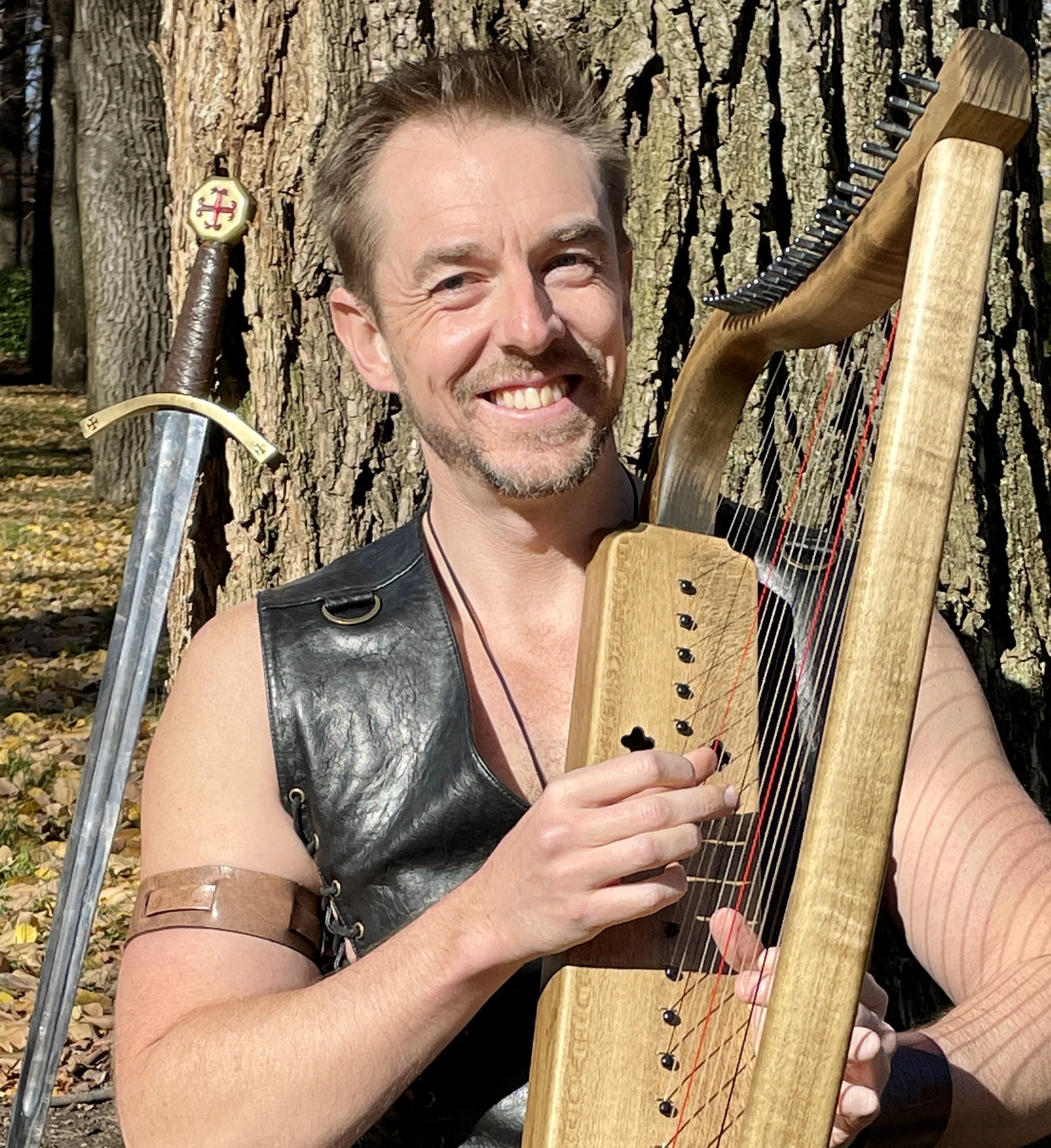
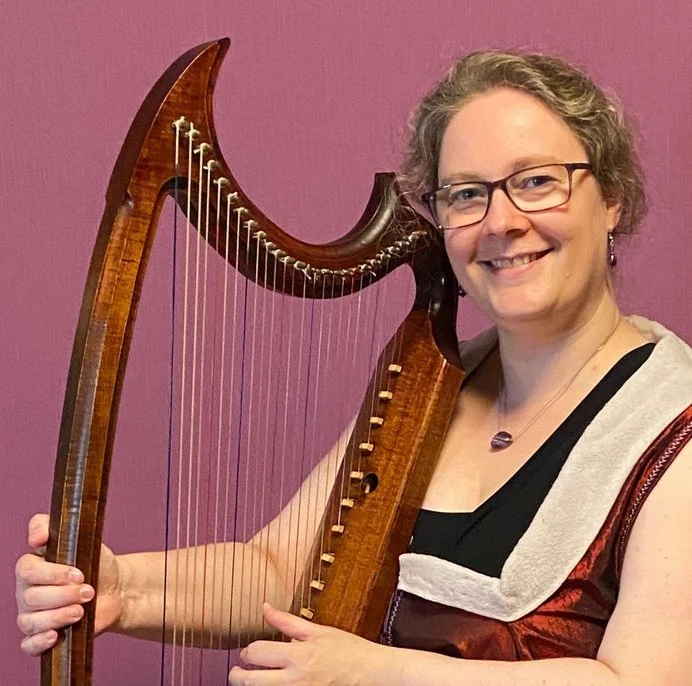
In this unique chamber concert, countertenor, medieval harpist and composer David Yardley
presents examples of song lyrics and poetry by or about sexual and gender minorities from before 1500, set to new historically-informed and inspired music of his creation.
The medieval Kingdom of Galicia is a prime example of how margins can be relative: Galicia sat literally at the end of the then-known world, the Finis Terrae, yet its significance in the history of medieval music is far from marginal. This programme delves into the music produced in the Kingdom of Galicia, and also explores what this music might tell us about that music of other groups existing at the margins, unable to notate their music.
Eva Moreda: Finis Terrae
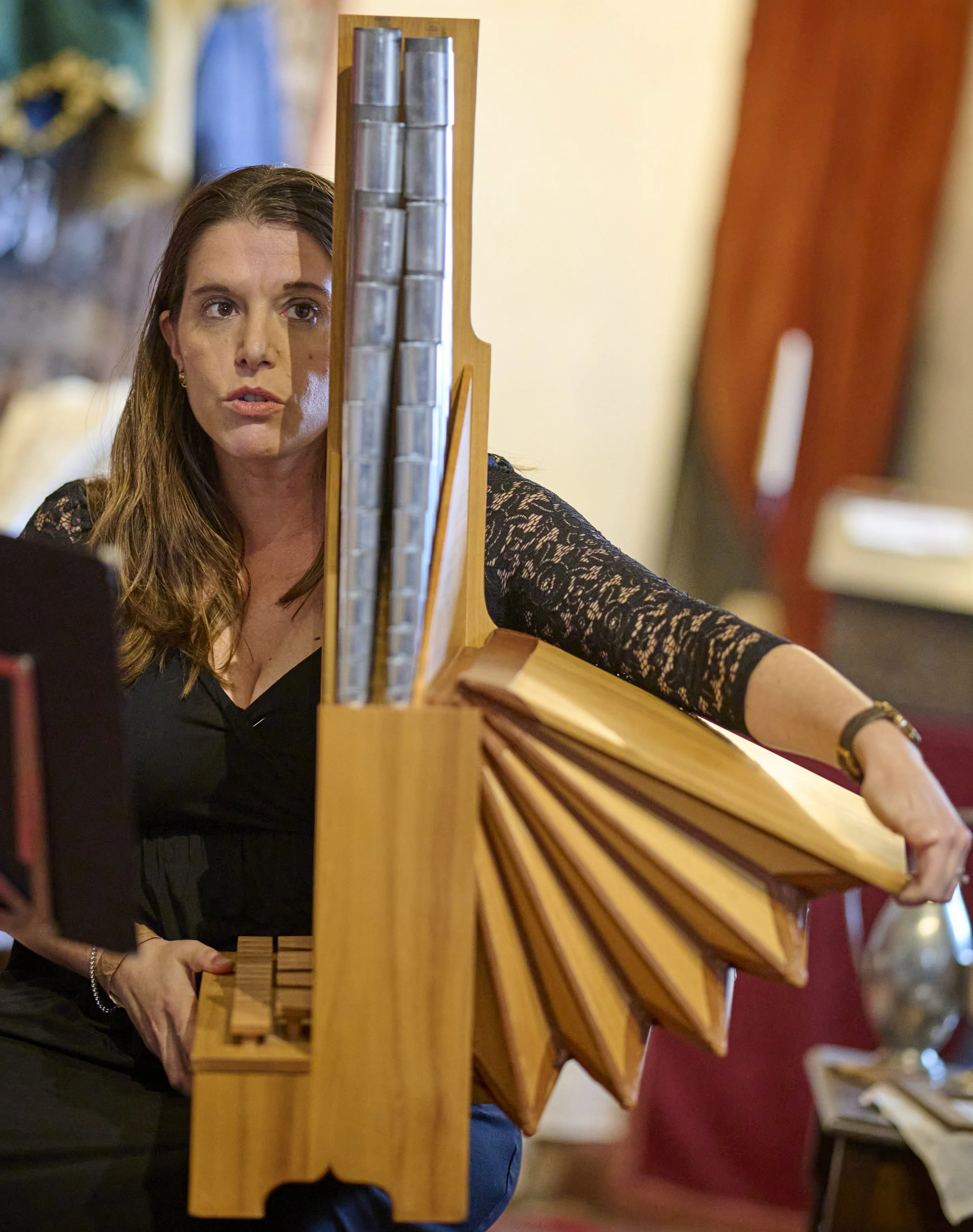
The German polymath Hildegard von Bingen does not only stand out for composing as a woman in medieval times but also through her exceptional, progressive melodies with self-written lyrics. The majority of her chants were written for the nuns in her abbey. Here, Innova Early Music will present their own arrangements for Countertenor and Nyckelharpa, including historically-informed early polyphony. Anna and Aleksandar Jova packed out the Castle Hearth in 2025 and we are delighted to offer their unique sound in a chamber concert this year.
Innova Early Music: Hildegard
Throughout history, women have (in general) only been allowed a footnote or some scribbles in the margin. Nevertheless, some women have left their mark and their names in the sources that survive. Patricia PE Janssen presents musical aspects of her research in to medieval women, with music composed by medieval European women.
Patricia PE Janssen: Medieval Women
Please abide by the suggested levels for workshops.
Beginner: no or minimal knowledge of the skill or instrument.
Intermediate or above : you are already confident in all the basics of the skill or instrument (ie how to tune, basic technique, you have a few tunes under your belt).
Workshops will operate at the level given.
Intermediate or above Vocal workshops are likely to require the ability to read music OR have very good oral learning skills
Workshops are all included in the Festival Pass, and to take part you must have the Festival Pass at least for the relevant day. The only exception is Medieval Mayhem which is also available to Castle Pass holders.
Workshops


Plenty of opportunities to sing this year, with:
Festival Choir with Richard de Winter, who will be working with members of Lucidarium on medieval Jewish repertoire. All levels welcome, 3 x 1 hour sessions
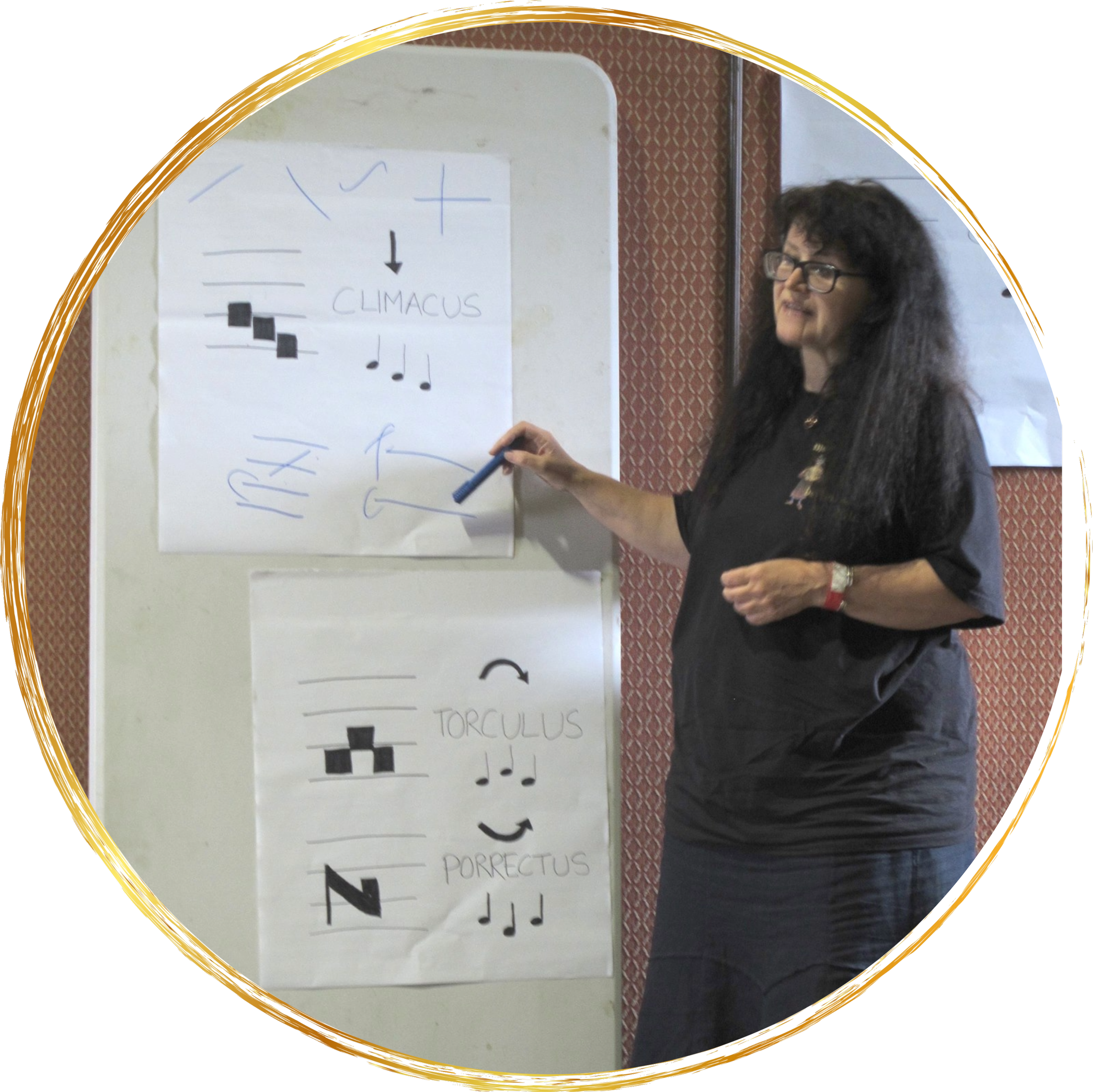
Festival Choir with Leah Stuttard, who’s going to be working on some ‘wackily awesome’ (her words!) late medieval two-part polyphony including the Discordant Litanies for the Dead! For everyone who would like to learn the music medieval style (ie without the dots) - so either you would like to challenge yourself, OR maybe you're not confident about reading music (or in fact don't read it at all).All levels welcome, 3 x 1 hour sessions
Explore vocal early polyphony and improvisation with Aleks of Innova Early Music. Intermediate and Advanced, 90 minutes FULLY BOOKED
Decolonise plainchant in a deep dive into Old Roman chant with Idrîsî Ensemble. Intermediate and Advanced, 3 hours.
Explore northern polyphony from Scandinavia, Poland and Germany with Leah Stuttard. Intermediate and Advanced, 2 hours in two sessions FULLY BOOKED
Vocal Opportunities
And as ever a good range of instrumental workshops as well:
Festival Big Band with Jude Rees - as with the Festival Choirs, this is a chance to prepare some work over the weekend for a late Sunday performance. All levels welcome, 3 x 1 hour sessions
Explore Modal Music with Peppe Frana - workshop for guitar types, Intermediate and Advanced, 75 minutes
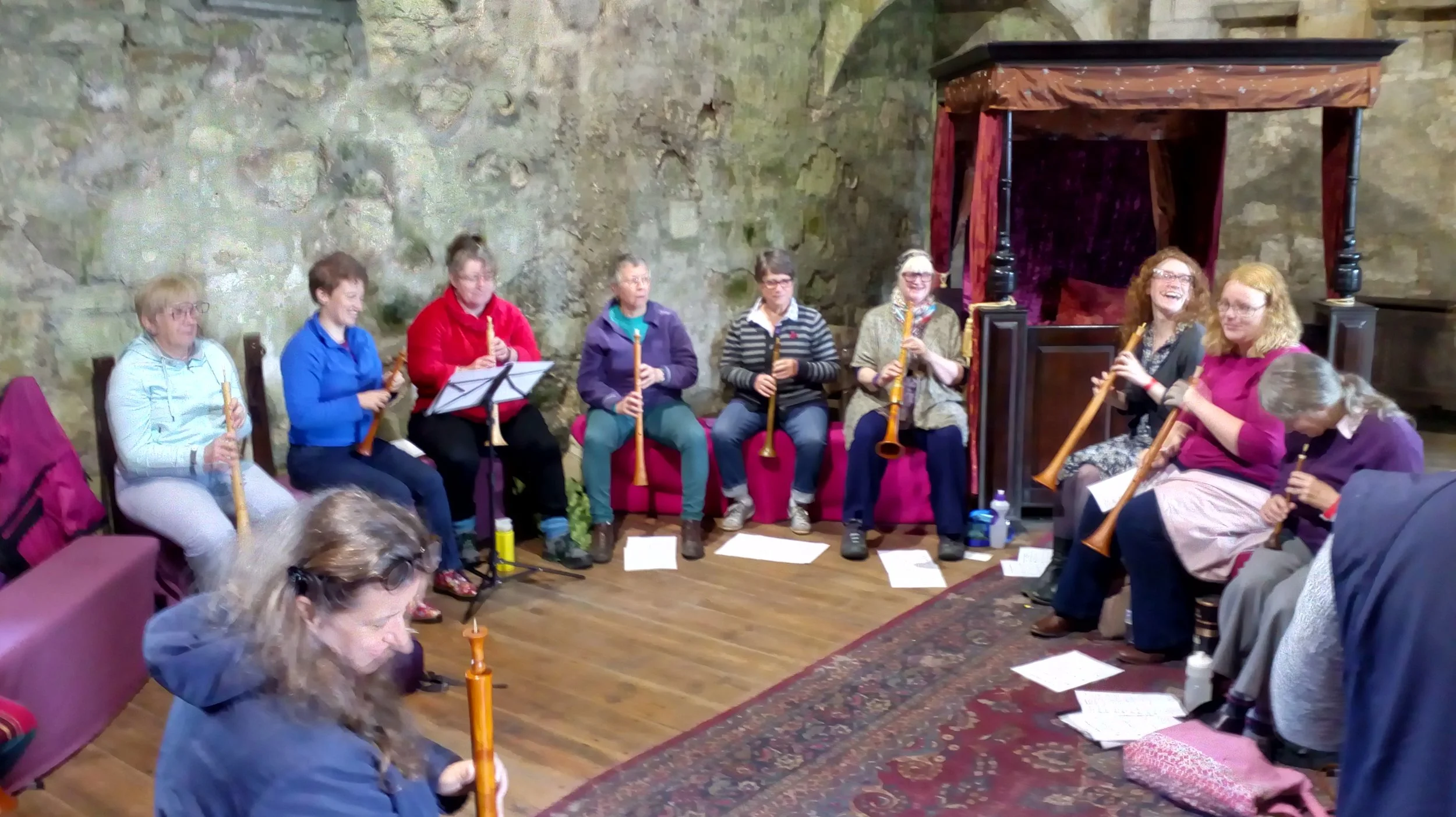
Beginner Shawm with Lizzie Gutteridge. 1 hour FULLY BOOKED
Beginner Bagpipes with Paul Leigh. 1 hour FULLY BOOKED
Work on the rhythms of central and southern Italy with Marco Cannavo - a workshop for tambourines and similar jingly things. All levels welcome, 75 minutes
Explore Cypriot traditional music and its irregular meters in Levantine Rhythms - with members of Sibil.la. All levels welcome and also any instrument, 90 minutes FULLY BOOKED
Instrumental Opportunities
Our dance offer with Gaita is a bit diifferent this year - traditional Balkan dances but with medieval tunes! One workshop for dance beginners, one for those with more experience, each 75 minutes
Very exciting1 New this year a practical Art Workshop exploring medieval marginalia, with the brilliant artist and festival regular Edward Foster. All welcome, 90 minutes FULLY BOOKED
Medieval Mayhem with Jude Rees - honestly, this could be anything but it is always epic! This is especially geared towards under 18s but all welcome. You can’t book for Medieval Mayhem - it is turn up on the day. 2 x 1 hour sessions.
And…
Talks
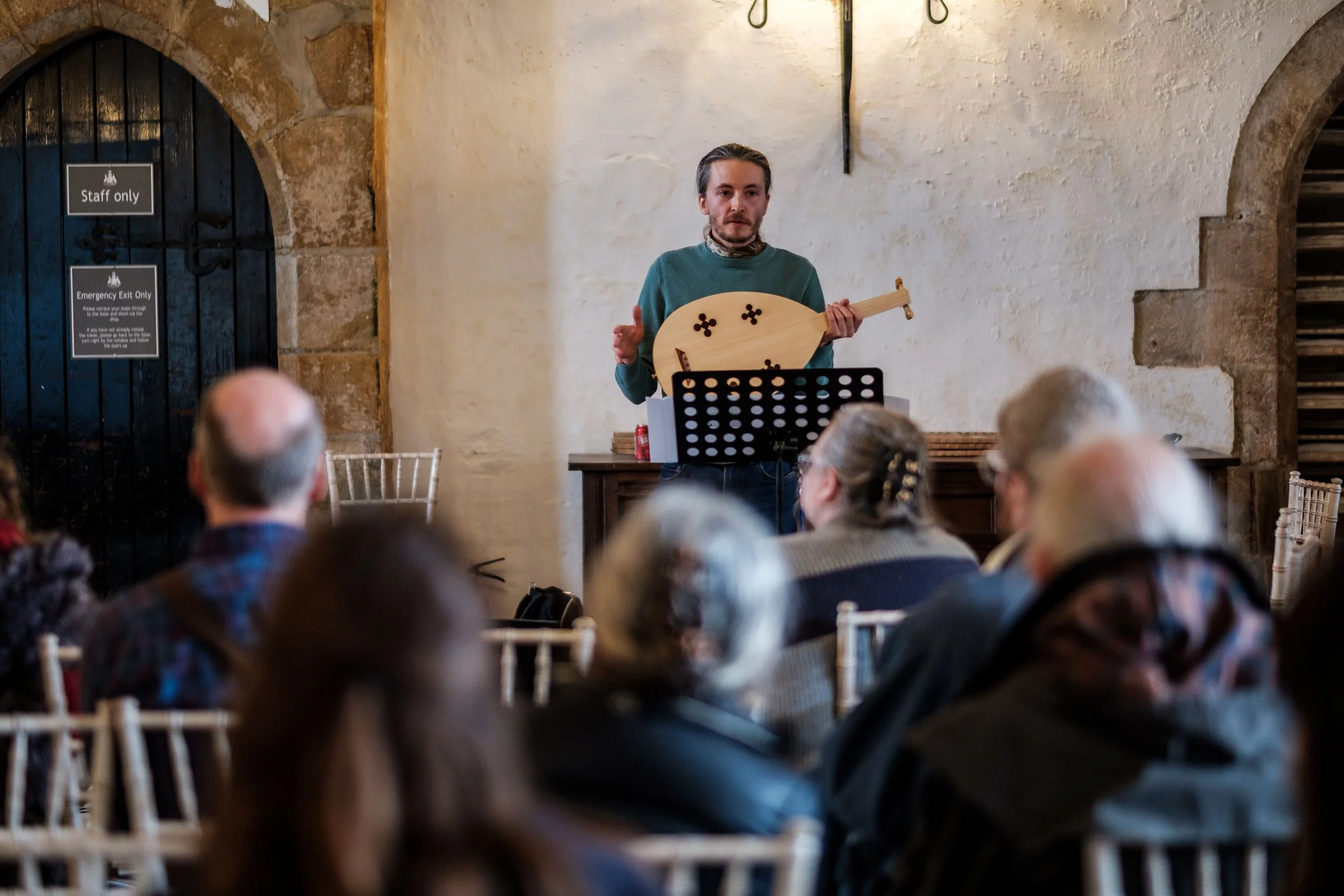
Talks take place in the afternoons, and are included in the Festival Pass. They usually last around 40-50 minutes, allowing for a little Q&A at the end of each. Talks are generally illustrated with images, music or both.
Juliette Primrose on Illness and Disability in the Cantigas de Santa Maria
Juliette Primrose on Acrobats and Marginalised Performers
Poul Høxbro: The Pipe and Tabor - the most popular one-man-band of the Middle Ages
Anna Jova on Reconstructing Music from Fragments
Patricia PE Janssen on Medieval Women
Thomas Fournil: Decolonising Conservatoires through Postcolonial Medievalism
Gill Page: Christendoms: Frankish Greece
Gill Page: Diversity and Medievalism
Eric Moulder on the Bolton Estate Shawm
Saz Lea and Aleks Switala: Na Rubieżach Dźwięku” (“On the Frontiers of Sound”). Marginalised medieval eastern Europe.